The Guide to Distributing RV Weight
If you’ve ever packed for an RV trip and wondered “Is this too much?” or “Does it matter where I put this?” — you’re asking the right questions.
Weight distribution is one of those RV topics that often gets mentioned but rarely explained in a clear, practical way. Many RV owners focus on staying under published weight ratings, but how that weight is distributed throughout the RV is just as important — especially when paired with accurate weighing methods like four-corner weighing.
In this guide, we’ll walk through what RV weight distribution is, why it matters, and how to distribute weight more safely and effectively — without overthinking it or turning your RV into a spreadsheet on wheels.
What Does “Distributing RV Weight” Mean?
At its simplest, distributing RV weight means placing cargo, supplies, liquids, and equipment in a way that keeps your RV balanced and stable — front to back and side to side.
- Gross Vehicle Weight Rating (GVWR)
- Gross Axle Weight Ratings (GAWR)
- Hitch or pin weight limits (for towables)
Every RV has a Gross Vehicle Weight Rating (GVWR), but weight distribution goes a step further. It looks at where the weight is placed and how that placement affects handling, braking, suspension, and tires.
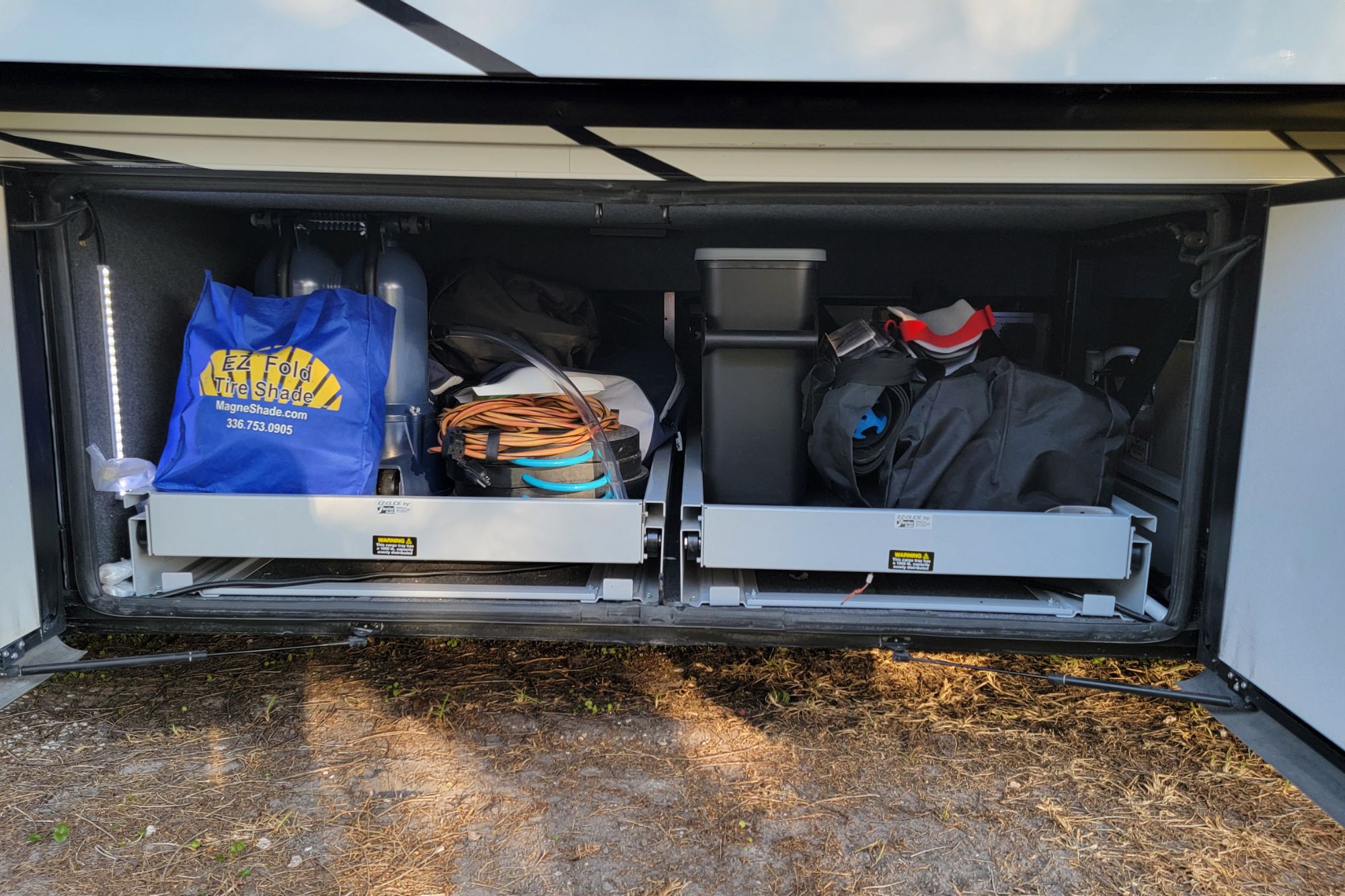
An RV can technically be under its maximum ratings and still handle poorly if weight is concentrated in the wrong areas.
Why Proper Weight Distribution Matters
- Excessive sway or porpoising
- Difficulty steering or braking
- Uneven tire wear
- Increased stress on suspension and axles
- Reduced fuel efficiency
Uneven loads can magnify external forces such as crosswinds, uneven pavement, or sudden maneuvers. A well-balanced RV is more predictable and easier to control.

Know Your Limits Before You Load
Knowing your RV’s weight limits provides the framework for making smart loading decisions. Weight distribution isn’t about eliminating weight entirely — it’s about staying within realistic operating margins.
Practical Tips for Distributing Weight Evenly
Centralize Heavy Items
- Low to the floor
- Close to the RV’s centerline
- Near the axles when possible
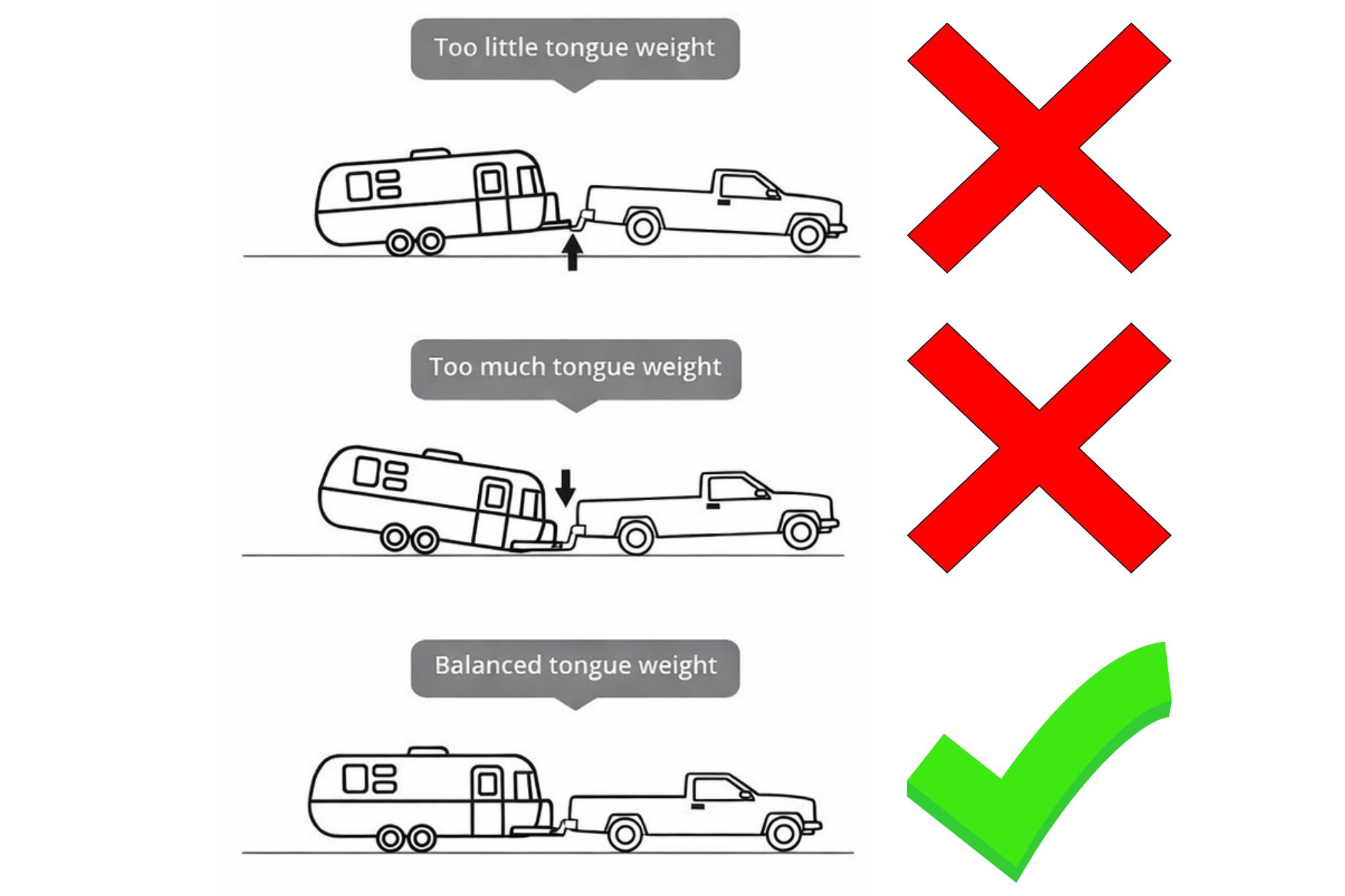
Balance Front to Back
Measuring tongue or pin weight during loading helps ensure proper balance before hitting the road.
Pay Attention to Side-to-Side Balance
Side-to-side imbalance is common due to kitchens, slide-outs, appliances, and fixed furniture layouts. Uneven side loading can overload individual tires even when overall weights appear acceptable.
Secure Cargo Properly
- Non-slip liners
- Tie-downs
- Storage bins
Using Tools to Help Maintain Balance
Certain tools and accessories can help improve stability and handling when weight distribution is less than ideal.
Weight Distribution Hitches
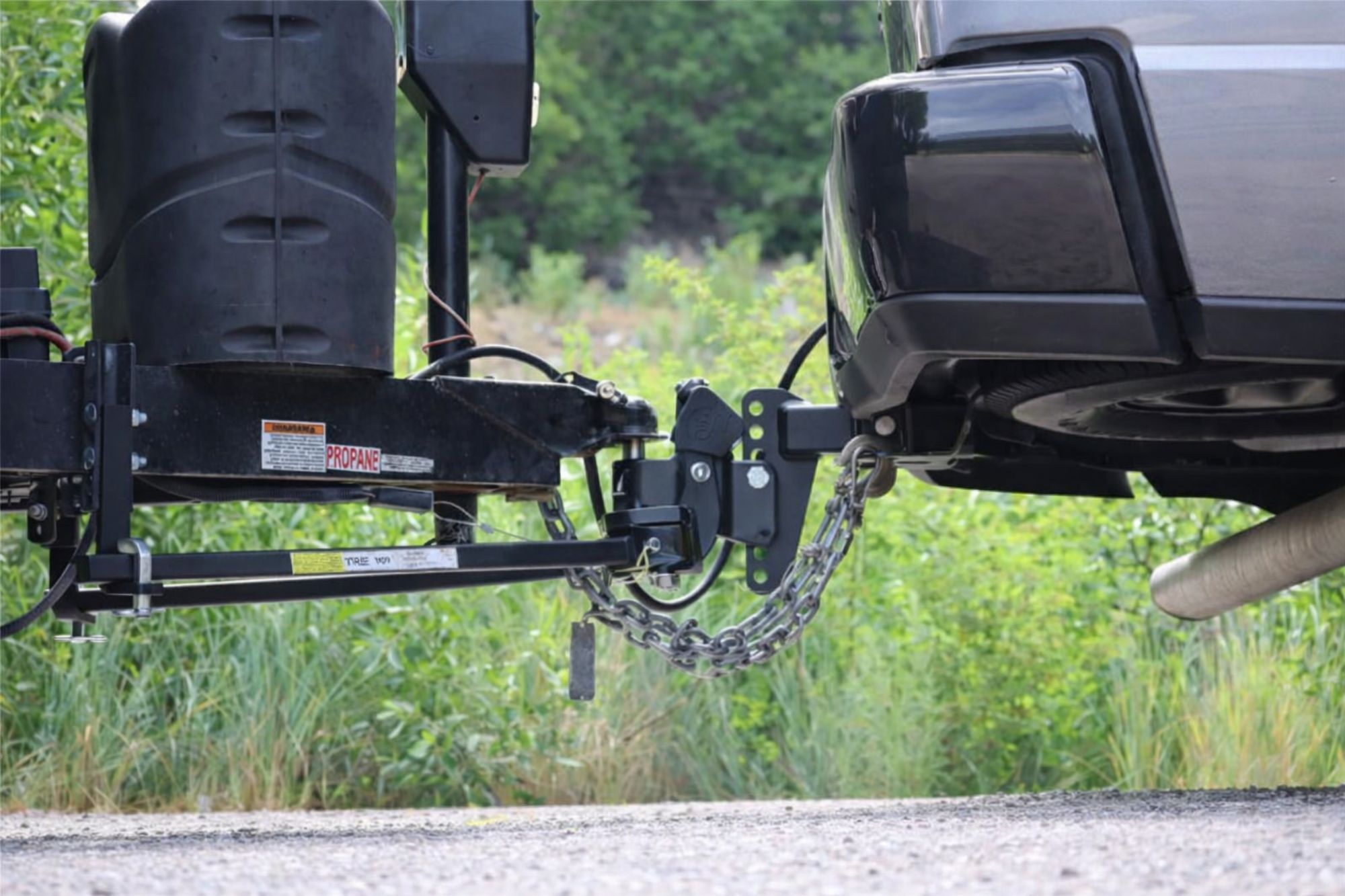
Weight distribution hitches help spread tongue weight more evenly between the tow vehicle and trailer axles. This can improve steering control, braking performance, and overall handling — especially when towing heavier trailers.
Sway Control Devices
Sway control devices are designed to reduce side-to-side trailer movement caused by wind, passing vehicles, or sudden maneuvers. They don’t replace proper loading, but they can add an extra layer of stability while traveling.
Load Leveling Systems
Load leveling systems help keep the RV riding level by compensating for uneven loads or changes in ride height. Maintaining a level stance can improve handling, reduce suspension stress, and contribute to a more comfortable driving experience.
These tools can be helpful, but they work best when paired with proper weight distribution and accurate weighing. They don’t replace proper loading, but they can add an extra layer of control — especially in windy conditions or on uneven roads.
How Weight Distribution and Weighing Work Together
Distributing weight thoughtfully reduces imbalance, while weighing confirms how your RV is actually carrying that weight. Our mobile RV weighing and inspection services help RV owners move from assumptions to real data.
Checking tire pressures based on actual load — not just sidewall numbers — is critical. The tire inflation tables and load resources can help you dial this in correctly.

Final Thoughts
Distributing RV weight doesn’t have to be complicated — but it does need to be intentional.
Understanding where weight is placed, how it affects handling, and why balance matters allows RV owners to travel more comfortably and confidently. Proper weight distribution protects tires, suspension components, and the overall driving experience.