What Is Four-Corner Weighing?
If you’re new to RVing — or even if you’ve been on the road for a while — you’ve probably heard people throw around terms like four-corner weighing, axle weights, and CAT scales.
Maybe you nodded along. Maybe you meant to look it up later. Or maybe you wondered if this was one of those things you were “supposed” to already understand.
You’re not alone.
Weight is one of the most misunderstood topics in the RV world — not because RV owners don’t care, but because the information is often fragmented, oversimplified, or explained in a way that assumes a trucking background.
Today, we’re going to walk through exactly what four-corner weighing is, why it matters, and why methods designed for commercial trucks don’t always tell the full story for RVs.
What Is Four-Corner Weighing?
Four-corner weighing is the process of measuring the weight carried by each individual tire position on your RV.
Not just the total weight. Not just the front axle and rear axle. But each corner — front left, front right, rear left, rear right (and additional axles when applicable).
This matters because RVs do not carry weight evenly.
Unlike commercial trucks, RVs are homes on wheels. Slide-outs, appliances, holding tanks, furniture, storage compartments, and floorplans all influence how weight is distributed — often unevenly and unpredictably.
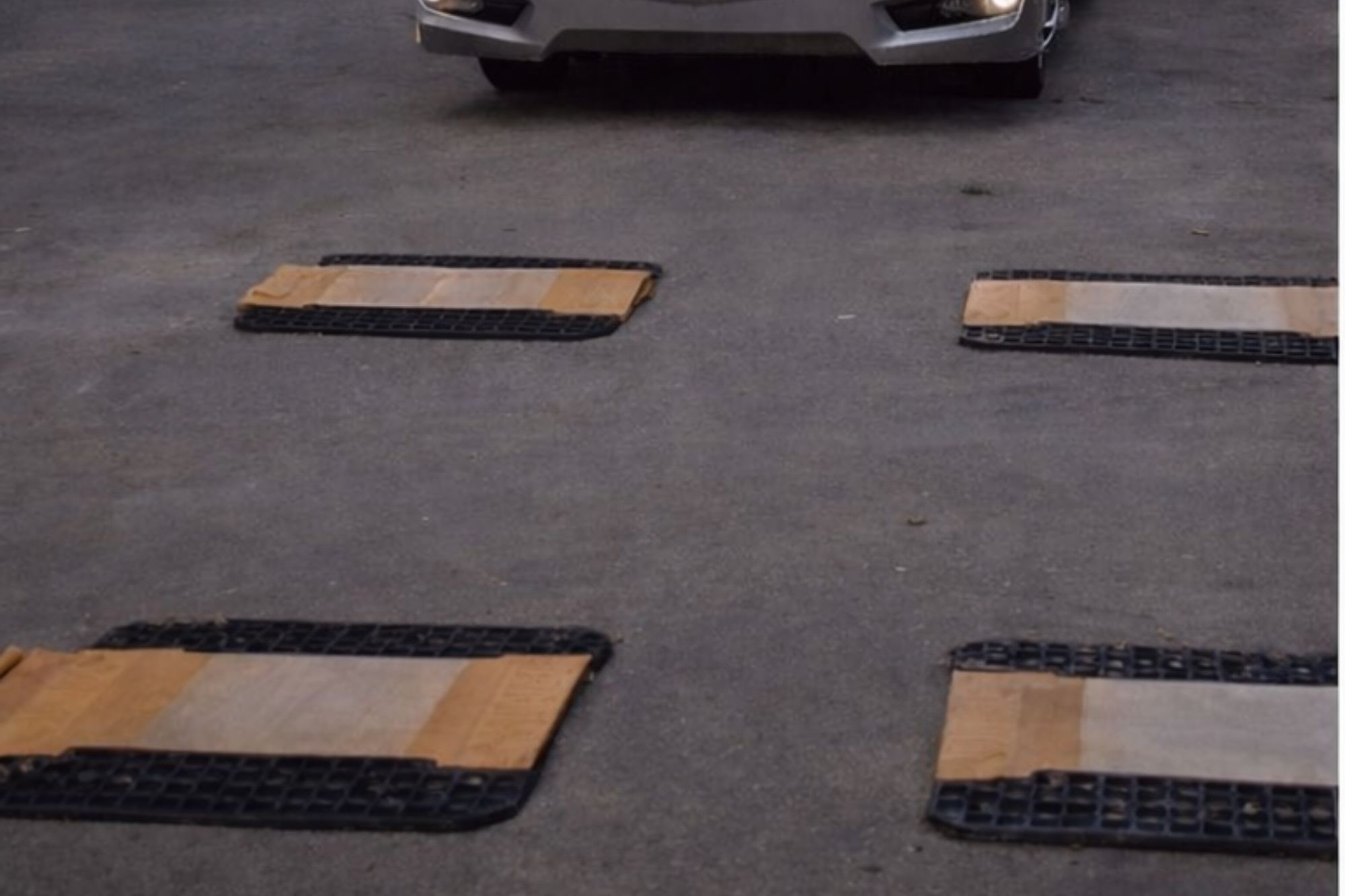
Four-corner weighing allows you to see side-to-side differences, individual tire loads, and situations where a single tire may be overloaded even when axle weights appear within limits.
Why Four-Corner Weighing Is Important
One of the most common assumptions in RVing is: “I’m under my GVWR, so I’m fine.”
That’s an understandable belief — but it’s incorrect.
An RV can be under its Gross Vehicle Weight Rating (GVWR), under its Gross Axle Weight Ratings (GAWR), and still have one or more tires carrying more weight than they are rated to handle.
This happens because most axle ratings assume the load is evenly split from left to right. In real-world RVs, that assumption often doesn’t hold true.
Kitchen layouts, refrigerators, washer/dryer combos, slide-outs, and storage bays are frequently concentrated on one side of the RV. Over time, this creates side-to-side imbalances that axle-only weighing cannot detect.
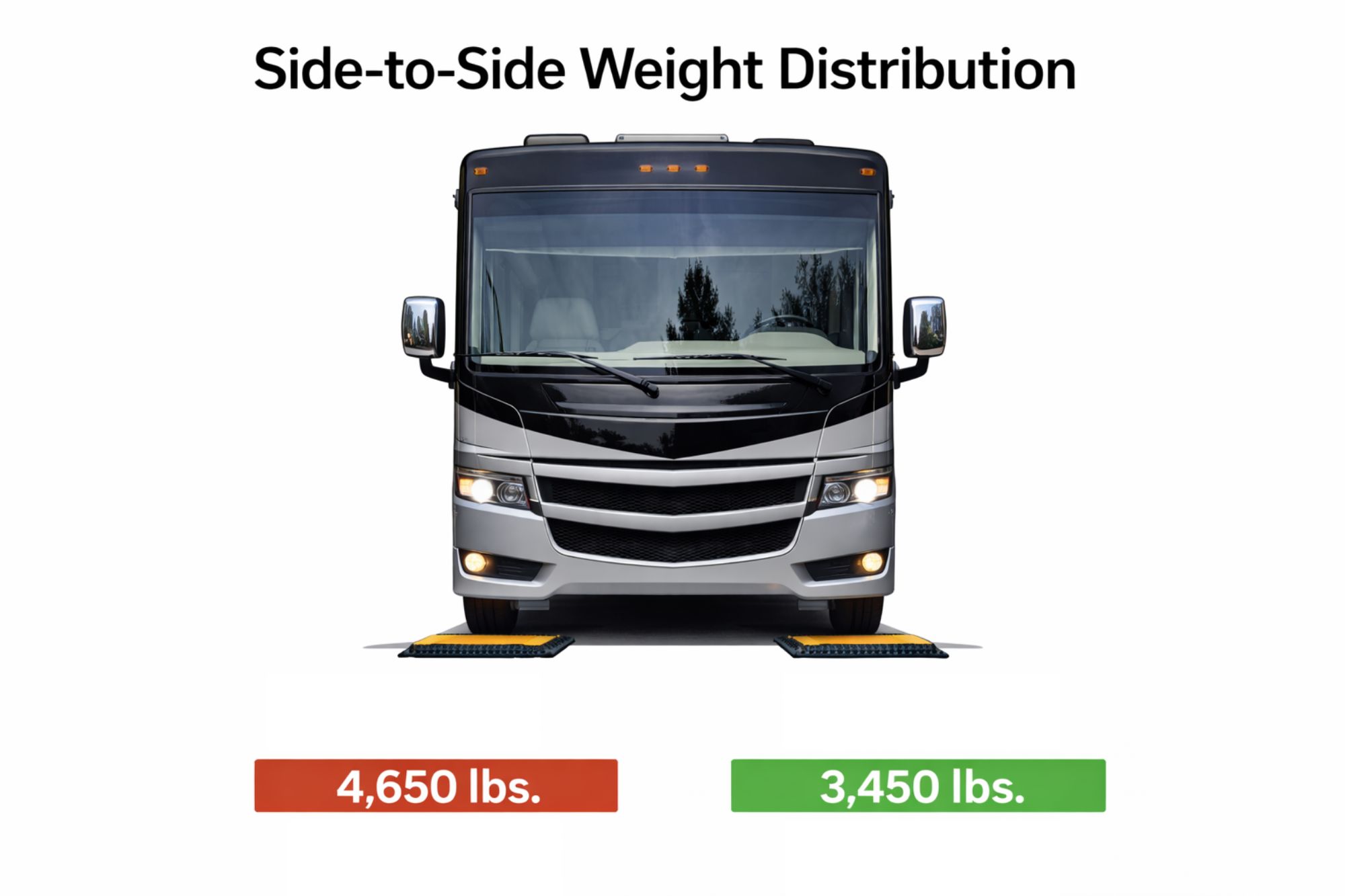
When a tire consistently carries more load than it’s designed for, it runs hotter, flexes more, and has a significantly higher risk of premature failure — even when tire pressure appears “correct.”
Four-corner weighing identifies these imbalances so RV owners can make informed decisions about tire inflation, cargo placement, and operating margins.
Why CAT Scales Work for Truckers — But Not Always for RVers
CAT scales are accurate, reliable, and widely used in the commercial trucking industry. They are an excellent tool — for the job they were designed to do.
Commercial trucks carry standardized loads, evenly distributed across axles by design. CAT scales measure combined axle weights, which is exactly what truckers need.
RVs, however, operate very differently.
When an RV pulls onto a CAT scale, multiple tires are measured together on a single platform. The scale reports total axle weight but does not show how that weight is split side-to-side.
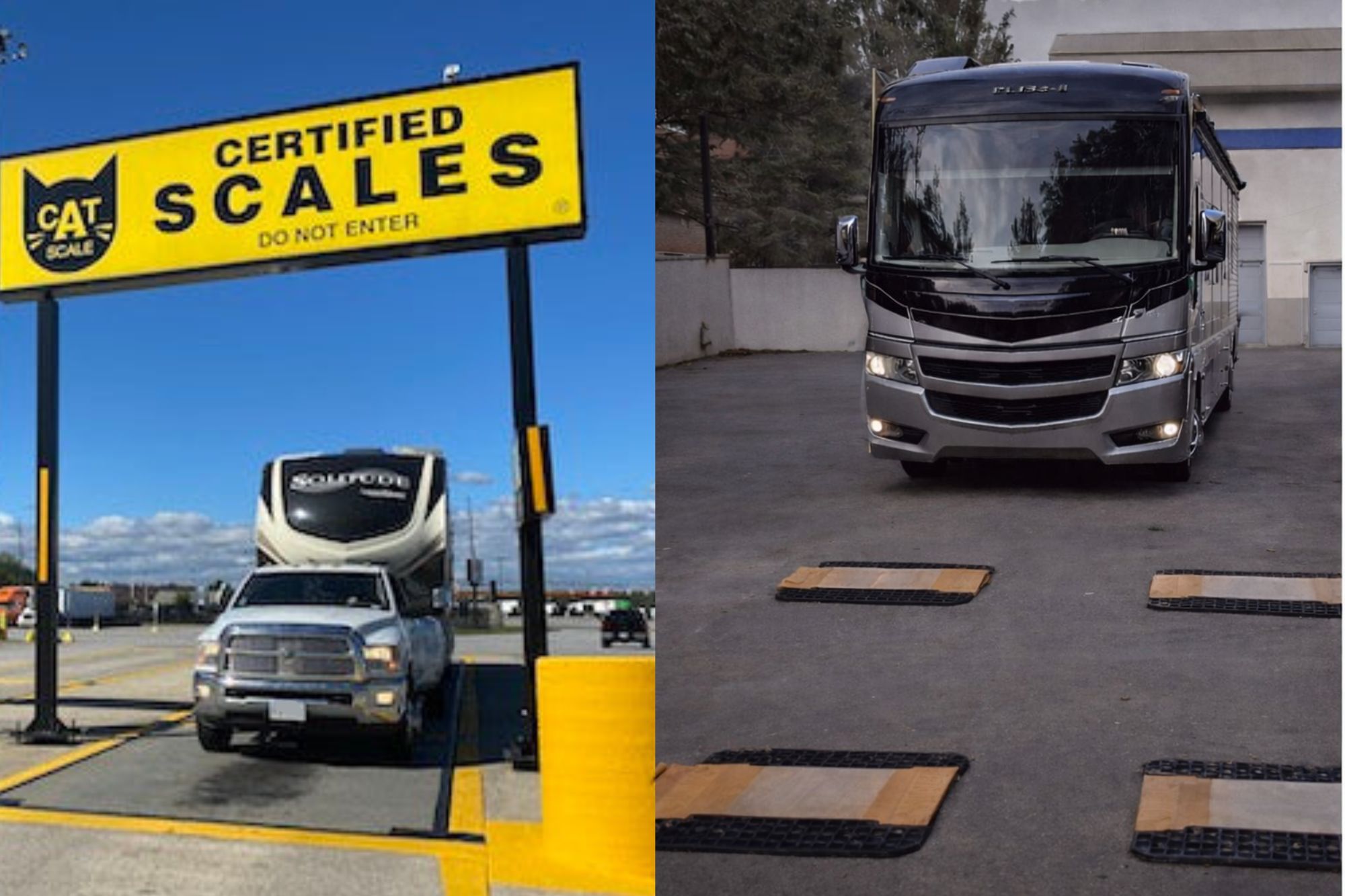
That means an RV can appear safely within limits while one tire is carrying significantly more weight than the tire next to it.
CAT scales are a useful starting point, but they don’t provide the complete picture RV owners need to set tire pressures accurately or identify hidden imbalances.
How Four-Corner Weighing Works
Four-corner weighing is more straightforward than it sounds.
Each tire is positioned on an individual scale pad, allowing the exact load at each wheel position to be measured.
Those measurements are then compared against tire ratings, axle ratings, and manufacturer assumptions. From there, recommendations can be made regarding tire inflation and, when possible, weight redistribution.
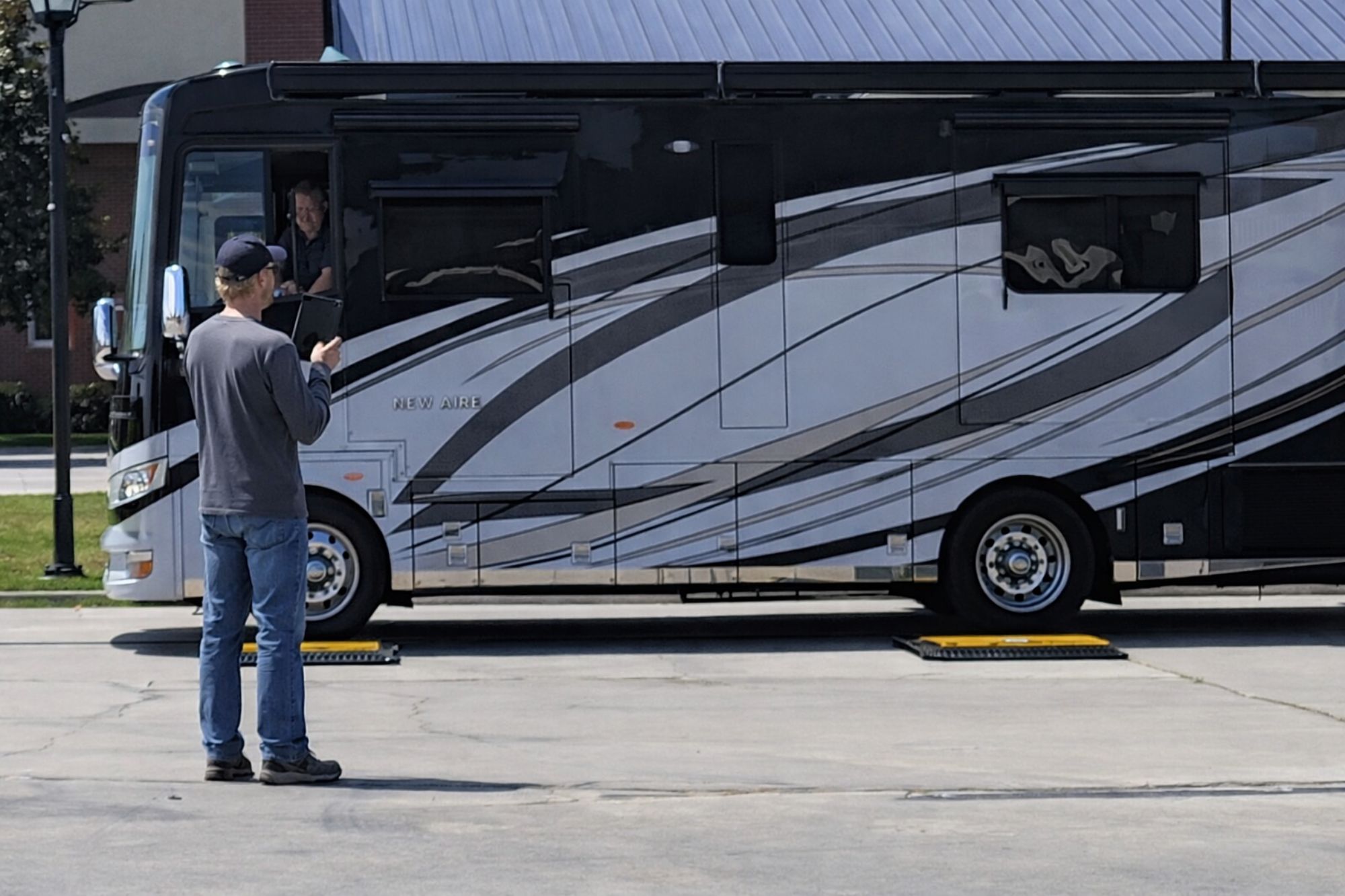
The goal is not perfection. The goal is awareness.
Four-corner weighing replaces guesswork with information and helps RV owners operate within realistic safety margins.
Real-World Application
In real-world scenarios, it’s common to find RVs that are technically “within limits” yet have one or more overloaded tire positions.
These situations often go unnoticed until a tire failure, handling issue, or suspension problem occurs.
With four-corner weighing data, RV owners gain clarity — not fear — about how their RV is actually carrying weight.
Final Thoughts
Four-corner weighing exists because RVs are unique. They are not commercial trucks, and they should not be evaluated as if they are.
Understanding how your RV carries weight allows you to make informed decisions about tire pressures, loading habits, and travel confidence.
Whether you are new to RVing or have years of experience, replacing assumptions with clear information is always a step in the right direction.